
Your Car is Totaled. The Insurance Offer is Insulting. Now What?

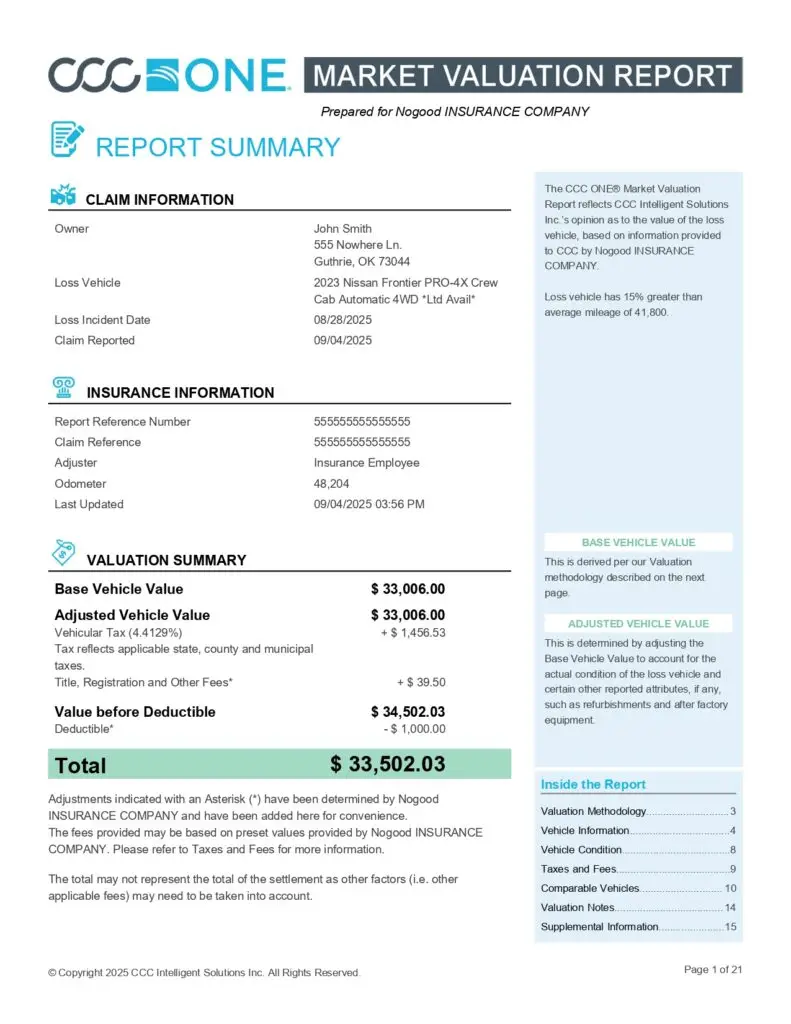
A car accident is stressful enough. But the second financial impact comes when your insurance company declares your vehicle a total loss and presents you with a “take it or leave it” settlement offer, usually built on a CCC One valuation.
If you’re like most vehicle owners, that offer is based on a “Market Valuation Report” from a company called CCC One (or one of its competitors, like Mitchell or Audatex). You’ll see a lowball value, a list of “comparable” vehicles you’ve never heard of, and a final check that you know isn’t enough to replace your car.
At Ironclad Claims Solutions, we see this every day. You are not wrong. These reports are often deeply flawed, and they are designed to do one thing: save the insurance company money by undervaluing your vehicle.
Here’s why those reports are wrong and what you can do about it.
What Is a CCC One Market Valuation Report?
CCC Intelligent Solutions sells valuation software to insurance companies, and the CCC One Market Valuation Report is what that software produces when your car is totaled. It is the document behind your settlement number. A typical report contains your vehicle’s year, make, model, trim, mileage, and equipment; a condition rating for each part of the car; a list of “comparable” vehicles; the adjustments applied to those comparables; and a final base value before taxes and fees. Remember who the customer is: the insurance company pays for the software, not you.
How CCC Calculates Your Car’s Value
CCC starts with comparable vehicles it finds for sale or recently sold. It adjusts each one for differences in mileage, options, and condition, and then averages the results into a base value. Many reports also apply a “projected sold adjustment,” which knocks each comparable’s advertised price down to estimate what it would actually have sold for. Every step is a judgment call built into the software. Change the comps or the condition rating, and your car’s value changes.
The Fatal Flaws of CCC One Valuations
Insurance companies present the CCC One valuation as an objective, data-driven analysis of the market. It is not. It is a proprietary algorithm used by your insurer—their client—and it has several fundamental flaws that consistently favor their bottom line.
1. The Myth of “Comparable” Vehicles: The report will list several “comps” to justify its value. We regularly see comps that are 100+ miles away, are a lower trim level (e.g., comparing a base model to your “Limited” or “Touring” package), or have significantly higher mileage. They are, by definition, not comparable.
2. The “Black Box” Adjustments: The report applies “adjustments” to these comps to supposedly match your vehicle’s condition and options. You will often see a tiny credit, like +$50 for a $2,000 panoramic sunroof, while seeing a huge debit, like -$1,500, for an arbitrary “condition” deduction. These adjustments are not based on real-world market data; they are formulas designed to suppress the value.
3. The Condition Rating Game: The report almost always starts by rating your vehicle as “Average” or “Fair” condition, even if it was immaculate before the crash. This immediately subtracts value before the “analysis” even begins. They may even penalize you for small, unrelated dings or normal wear and tear, effectively double-dipping on deductions.
The most important thing to know is this: The CCC One report is the start of a negotiation, not the final word.

How to Check Your CCC Report Line by Line
Before you accept or argue, verify these items:
- Trim and options: Does the report list your actual trim level and every factory package?
- Mileage: Is it your real odometer reading?
- Condition ratings: Were any components rated below how your car actually looked before the loss?
- Comparables: How far away are they, how old are the listings, and are they the same trim?
- Adjustments: Do the dollar amounts for options and mileage reflect what buyers actually pay?
- Projected sold adjustment: How much was deducted from each comparable?
- Taxes and fees: Are sales tax and title and registration fees included where your state requires them?
Every error you find is a documented reason the number is wrong.
How to Contest a CCC One Valuation: The Appraisal Clause
So, what do you do? You can spend weeks arguing with an adjuster who is trained to simply point back to the “report.” You can send them your own listings from Autotrader or Cars.com, which they will likely ignore.
Or, you can use the most powerful tool in your insurance policy: the Appraisal Clause.
The Appraisal Clause (sometimes called the “Right to Appraisal”) is a provision in almost every auto insurance policy. It outlines a formal process to resolve a dispute over the Actual Cash Value (ACV) of your vehicle.
It effectively takes the decision out of the adjuster’s hands and removes their flawed report from the equation.
How the Appraisal Process Works
Invoking the Appraisal Clause is a straightforward process, but it requires an expert on your side.
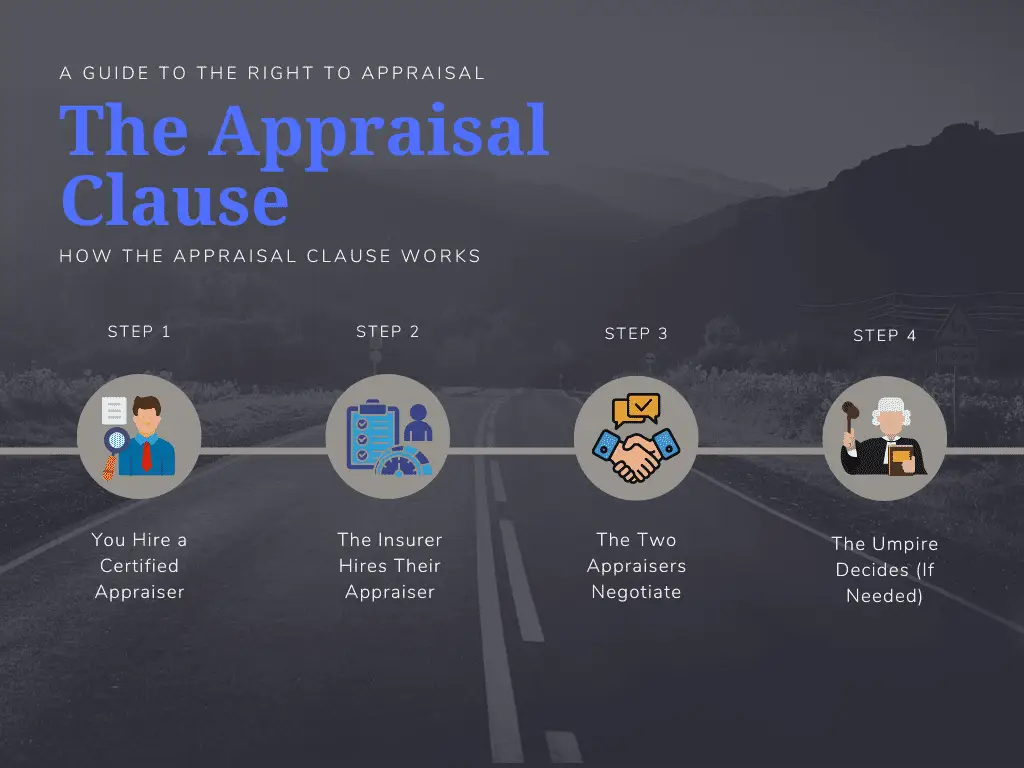
You Hire an Independent Appraiser: You hire your own independent vehicle appraiser (like Ironclad Claims Solutions) to represent you. Most policies require each appraiser to be competent and disinterested, and choosing a certified appraiser strengthens your position. This appraiser will perform a detailed, USPAP-compliant (Uniform Standards of Professional Appraisal Practice) evaluation of your vehicle to determine its true pre-loss market value.
The Insurer Hires Their Appraiser: Once you invoke the clause in writing, your insurance company must hire its own appraiser.
The Two Appraisers Negotiate: The two expert appraisers present their findings and negotiate a binding settlement value. They are not arguing about the CCC report; they are arguing about real-world data, condition, options, and the true market. If the two appraisers agree, the process is finished and legally binding.
The Umpire Decides (If Needed): If the two appraisers cannot agree, they jointly select a neutral, third-party “Umpire.” The Umpire reviews the evidence from both sides, and a decision made by any two of the three parties (your appraiser, their appraiser, or the Umpire) becomes binding on the insurance company.
This process forces the insurance company to defend its position against a true expert, not just a vehicle owner. In our experience, this is the single most effective way to recover the full, fair value you are owed for your total loss. For a detailed walkthrough, see our guide on how to invoke the appraisal clause.
CCC One Valuation FAQs
Is a CCC One valuation the final word?
No. It is the insurer’s opening offer, not a legal determination of your car’s value.
Can I get a copy of my CCC report?
Ask your adjuster for the full report, including every comparable vehicle and every adjustment. You need it to check their math.
Is CCC One the same as Kelley Blue Book?
No. KBB is a consumer pricing guide. CCC One is insurer-licensed software built from specific comparables and adjustments, so the two numbers often differ.
How do I dispute a CCC valuation?
Start by documenting the errors. If the insurer won’t move, most policies let you invoke the appraisal clause. Our step-by-step guide on how to invoke the appraisal clause walks you through it.
Don't Leave Money on the Table
Your insurance company owes you for the actual pre-loss value of your vehicle—what it would have cost to buy your specific car from a dealer on the day before the accident. The CCC report is just their low first offer. Before you accept anything, check our guide to what a total loss settlement should include.
If you’re facing a total loss and feel the offer is too low, contact Ironclad Claims Solutions today. We are certified automotive appraisers who specialize in total loss disputes and the appraisal clause. We’ll review your insurer’s report for free and tell you how we can help you get the settlement you deserve.
If your vehicle was repaired instead of totaled, you may still be owed diminished value, and a post-repair inspection can confirm the repairs were done correctly.