
How to Invoke the Appraisal Clause on a Total Loss
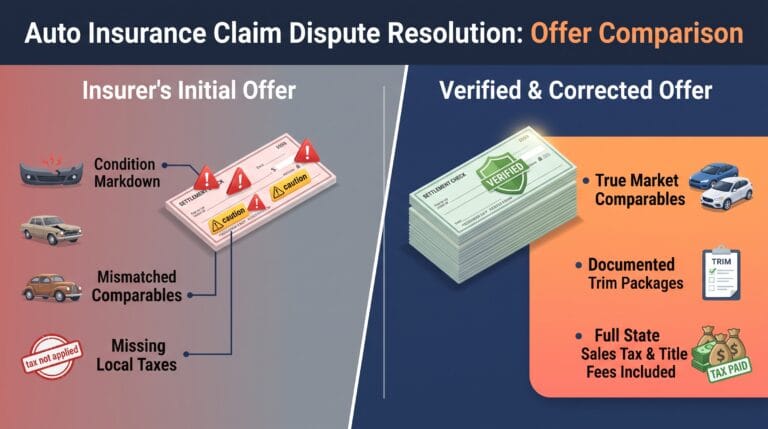
When your insurer’s total loss offer is too low and the adjuster will not budge, most auto insurance policies give you a formal way out of the stalemate: the appraisal clause. It takes the valuation dispute out of the adjuster’s hands and puts it before independent appraisers, and if needed, a neutral umpire.
The appraisal clause is one of the most effective tools a vehicle owner has, but it is also one of the least used, mostly because people do not know how it works. Invoking it is not complicated, but the details matter. A vague request, the wrong appraiser, or a missed step can slow the process down or weaken your position.
This guide walks through how to invoke the appraisal clause on a total loss, step by step: what to do first, what to put in writing, what happens next, what it costs, and what to do if the insurer stalls.
Before You Invoke the Appraisal Clause
A little preparation up front makes the appraisal process faster and stronger. Before you send anything to the insurer:
1. Read Your Policy’s Appraisal Provision: Find the appraisal section in your auto policy, usually in the physical damage portion. Note who can demand appraisal, any time limits for naming appraisers, and how costs are divided. Policy wording varies, and the language in your policy is what governs the process.
2. Confirm the Dispute Is About the Amount: Appraisal resolves disagreements over the amount of the loss, such as your vehicle’s actual cash value. It does not decide coverage questions, like whether the policy covers the loss at all. If the insurer has denied coverage, appraisal is not the right tool.
3. Get the Full Valuation Report: Ask for the complete report behind the offer, whether from CCC One, Mitchell, or Audatex, including every comparable and adjustment. Your appraiser will need it. Our guide on how to contest a CCC One valuation explains what to look for.
4. Gather Your Documentation: Collect photos of the vehicle before the loss if you have them, maintenance records, receipts for recent repairs or new tires, and the window sticker or build sheet. This evidence supports a stronger valuation.
5. Choose Your Appraiser: Most policies require each appraiser to be competent and disinterested, meaning qualified and without a personal stake in the outcome. Look for credentials, valuation experience, and a track record of working through the appraisal process.
The appraisal clause doesn't ask the adjuster to change their mind. It takes the decision out of their hands.

How to Invoke the Appraisal Clause in Writing
Appraisal is invoked with a written demand to your insurer. A phone call or a casual email to the adjuster is not enough. Send a clear, dated letter or email and keep a copy. Your demand should include:
Your name, policy number, claim number, and the date of loss.
A clear statement that you disagree with the insurer’s determination of the amount of loss.
A statement that you are invoking the appraisal provision of your policy.
The name and contact information of your appraiser.
A request that the insurer name its own appraiser within the time your policy allows.
A simple demand might read:
“Re: Policy No. [number], Claim No. [number], Date of Loss [date]. I disagree with your valuation of the amount of loss for my vehicle and hereby invoke the appraisal provision of my policy. I have selected [appraiser name, company, phone, email] as my appraiser. Please identify your appraiser within the time required by the policy.”
This sample is general information, not legal advice. Policy wording and state rules vary, so match your demand to your policy’s language.
What Happens After You Invoke
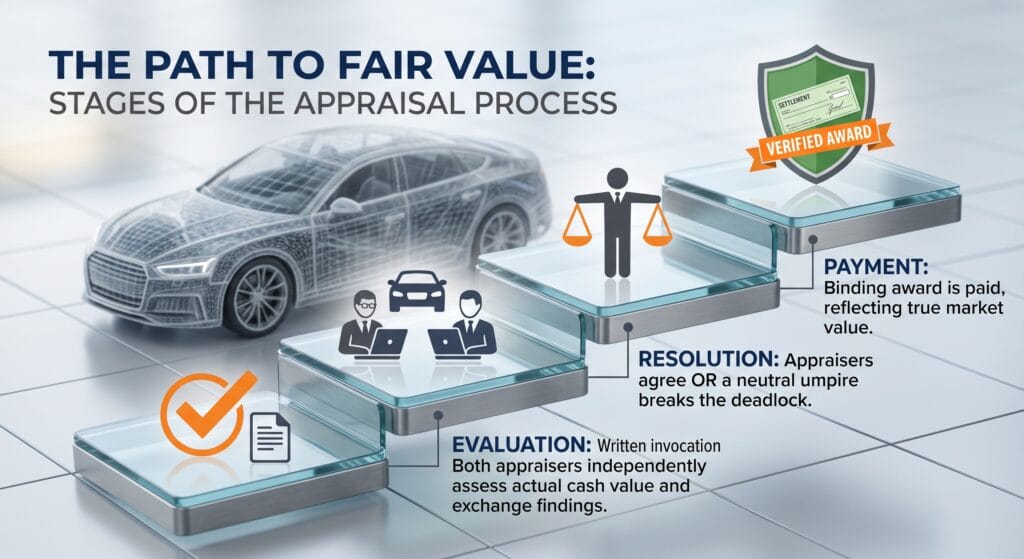
Once your written demand is sent, the process generally follows these steps:
The Insurer Names Its Appraiser: Your insurer selects its own appraiser, usually within a time limit set by the policy.
The Appraisers Evaluate the Vehicle: Each appraiser independently determines the vehicle’s actual cash value using comparables, condition, options, and market data, and they exchange their findings.
The Appraisers Try to Agree: If the two appraisers agree on the amount of loss, they put it in writing, and that agreement sets the amount of the loss.
An Umpire Decides If Needed: If they cannot agree, a neutral umpire reviews both positions. Under most policies, an agreement between any two of the three (your appraiser, the insurer’s appraiser, and the umpire) is binding.
The Award Is Paid: The insurer pays the award, less any applicable deductible and prior payments, under the terms of your policy.
What Appraisal Costs
Under most auto policies, each side pays its own appraiser, and the cost of the umpire is split equally. Check your policy for its exact terms. Because the appraisal award is often meaningfully higher than the original offer, the cost of your appraiser is usually small compared to the difference it can make, but ask your appraiser for a clear fee structure up front.
What to Do If the Insurer Stalls
Invoking appraisal does not always go smoothly. Some insurers respond slowly, delay naming their appraiser, ask you to “try one more round” of negotiation first, or question whether appraisal applies. A few steady habits keep the process moving:
Keep everything in writing. Follow up phone calls with an email that summarizes what was said, and keep a dated log of every contact.
Follow up on a regular schedule. If the insurer has not named its appraiser, send polite, consistent written follow-ups that reference your original demand and the policy’s time limits.
Point back to the policy language. The appraisal provision is part of the contract you paid for. Quoting it directly is often enough to move a stalled claim forward.
Know when to escalate. If the insurer refuses to participate or ignores the process, a complaint to your state’s department of insurance or a consultation with an attorney may be the next step.
An experienced appraiser handles much of this follow-up for you. If you are facing a lowball total loss offer, contact Ironclad Claims Solutions. We’ll review your insurer’s valuation for free and tell you whether appraisal makes sense for your claim. Before you decide, it also helps to know what a total loss settlement should include, and you can learn more about our appraisal clause services.