What Should a Total Loss Settlement Include?
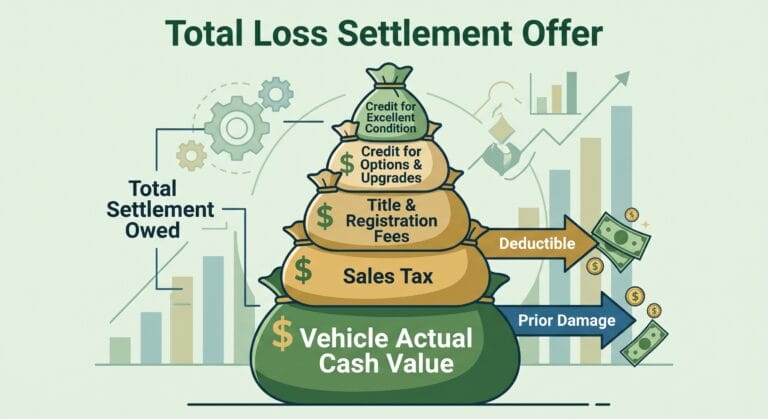
When an insurance company declares your vehicle a total loss, the settlement offer usually arrives as a single number. That number is not one figure; it is a stack of line items, and the most common way a total loss settlement comes up short is not a dramatic error but a missing or undervalued line.
Most owners look only at the bottom line and ask whether it feels fair. A better question is whether every item you are owed is actually on the page. Depending on your state and your policy, a total loss settlement can include the vehicle’s actual cash value, sales tax, title and registration fees, and credit for options, upgrades, and condition that the insurer’s valuation report may have missed.
This guide walks through what a total loss settlement should include, what can legitimately be subtracted, and how to check your offer before you sign anything.
What Your Total Loss Settlement Should Include
Exact requirements vary by state and by policy, but a complete total loss settlement is generally built from these components:
1. The Actual Cash Value (ACV) of Your Vehicle: This is the value of your vehicle immediately before the loss, based on comparable vehicles matched by year, make, model, trim, options, mileage, and condition. It is the largest item in the settlement and the one most often understated, usually through mismatched comparables or unsupported condition deductions.
2. Sales Tax: Many states require insurers to include sales tax in a total loss settlement, at least on first-party claims. Some pay it up front; others reimburse it only after you buy a replacement vehicle within a set period. If tax is missing from your offer, ask why.
3. Title and Registration Fees: Many states also require the insurer to cover the title transfer and registration fees you will pay on a replacement vehicle. These are small amounts individually, but they are frequently left off.
4. Options, Packages, and Upgrades: Factory packages and options should be reflected in the valuation, and a missed package can cost you thousands. Aftermarket equipment such as wheels, lift kits, or audio systems may be covered only up to your policy’s custom equipment limit, so check your policy.
5. Credit for Condition and Recent Investments: New tires, recent major repairs, and documented maintenance support a better condition rating. Insurers rarely credit them unless you provide receipts or records, so gather that documentation early.
A total loss settlement is not one number. It is a stack of line items, and every missing line is money that stays with the insurance company.
What Can Be Subtracted From a Total Loss Settlement
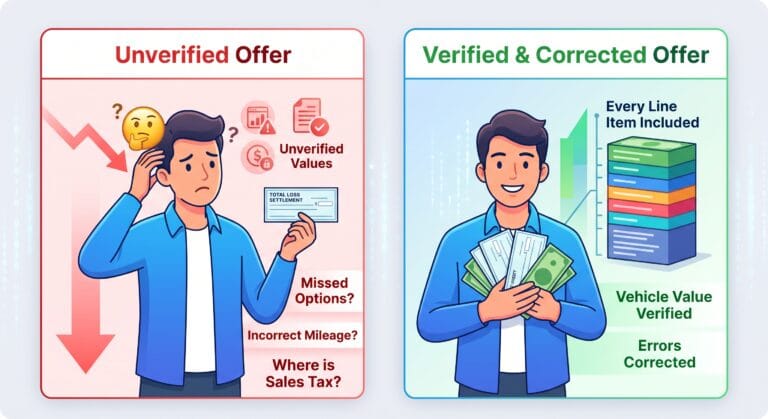
Some deductions are legitimate. The key is knowing which ones belong in your settlement and making sure each one is accurate.
Your deductible. On a first-party claim under your own collision or comprehensive coverage, the insurer subtracts your deductible. On a third-party claim against an at-fault driver’s insurer, a deductible generally should not apply.
Salvage value, if you keep the vehicle. If you choose to retain your totaled vehicle, the insurer will deduct its salvage value. That figure is sometimes inflated, and it can be disputed like any other part of the valuation.
Genuine prior damage. Unrepaired damage that existed before the loss can reduce value, but the deduction should be specific, documented, and supported in dollars, not a vague lump-sum condition penalty.
Your loan payoff. If you have a loan, the insurer pays your lender first, and you receive whatever is left. That is not a deduction from your vehicle’s value, but it affects the check you receive. If you owe more than the vehicle is worth, gap coverage, if you have it, may cover the difference.
How to Check Your Total Loss Settlement Offer
Before you accept a settlement, work through it line by line:
Get the Full Valuation Report: Ask your insurer for the complete valuation report behind the offer, whether it comes from CCC One, Mitchell, or Audatex. A summary letter is not enough; you need the comparables and every adjustment.
Verify Your Vehicle’s Details: Confirm the year, trim, options, packages, and mileage listed in the report match your vehicle. A wrong trim or missing package is one of the most common and most costly errors.
Review the Comparables: Check whether each comparable vehicle truly matches yours and whether it reflects the market where you would actually buy a replacement. Our guide on how to contest a CCC One valuation explains what to look for.
Check Every Adjustment: Look at the condition rating and each deduction. Every deduction should be specific and supported, not a lump sum.
Confirm Tax and Fees: Make sure sales tax, title, and registration fees are included where your state requires them, or that you understand how to claim them after buying a replacement.
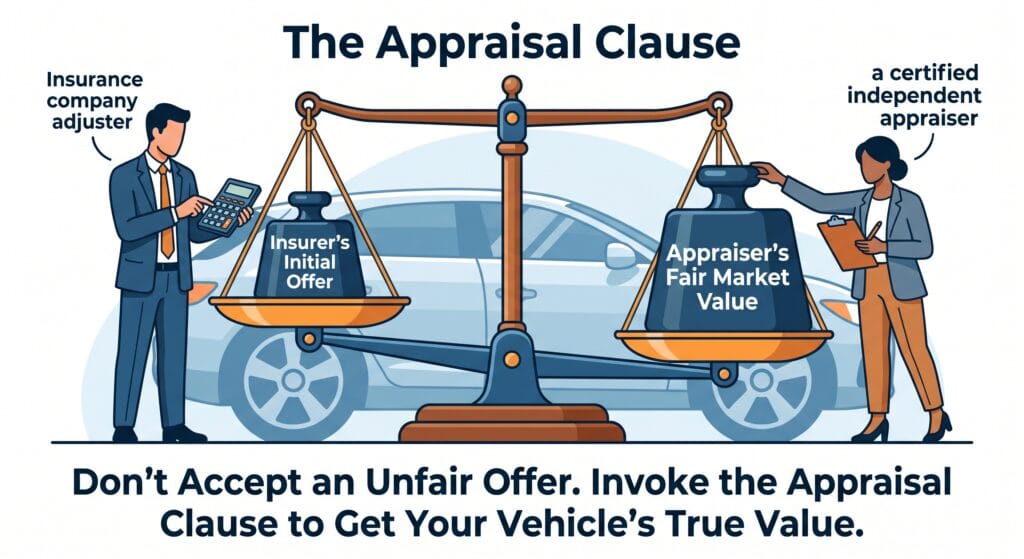
If you find errors and the insurer will not correct them, most auto policies give you a formal remedy: the appraisal clause, which lets an independent appraiser establish the value instead of the adjuster. Our step-by-step guide to invoking the appraisal clause walks through the process.
Don't Sign Until Every Line Is Right
Once you accept a total loss settlement, it is usually very difficult to reopen. Take the time to confirm that the vehicle’s value is supported by genuine comparables, that every deduction is specific and justified, and that sales tax and fees are handled the way your state requires.
If something does not add up, contact Ironclad Claims Solutions before you sign. We are certified automotive appraisers who specialize in total loss disputes and the appraisal clause. We’ll review your insurer’s valuation report for free and tell you whether your settlement is missing anything.
Rules for sales tax, fees, and total loss handling vary by state. For state-specific details, see our pages for Oklahoma, Arkansas, Kansas, and Missouri.